Ulcerative pododermatitis in rabbits (avascular necrosis / sore hocks) describes ulcerated, infected skin on the caudal metatarsus and foot, sometimes extending to the metacarpus. Lesions develop focally over bony prominences. Predisposing causes usually include pressure, friction, and moisture. Ulcerative pododermatitis is a serious, painful condition that progresses and is difficult to manage once infection is established. Lesions bleed repeatedly and may cause anaemia. Death may result from septicaemia or anorexia due to pain. Increasingly the condition is recognised as secondary to other physical, conformational, or husbandry issues. Large breeds kept in hutches are especially predisposed — a major welfare concern on farms — but pet rabbits are also affected.
Rabbits lack foot pads; skin is thin and dense fur substitutes for cushioning. Unsuitable flooring (hard/wet bedding, carpet) can provoke disease. Obesity, pregnancy, reduced mobility, and concurrent disease (e.g. spondylosis) are additional risk factors.
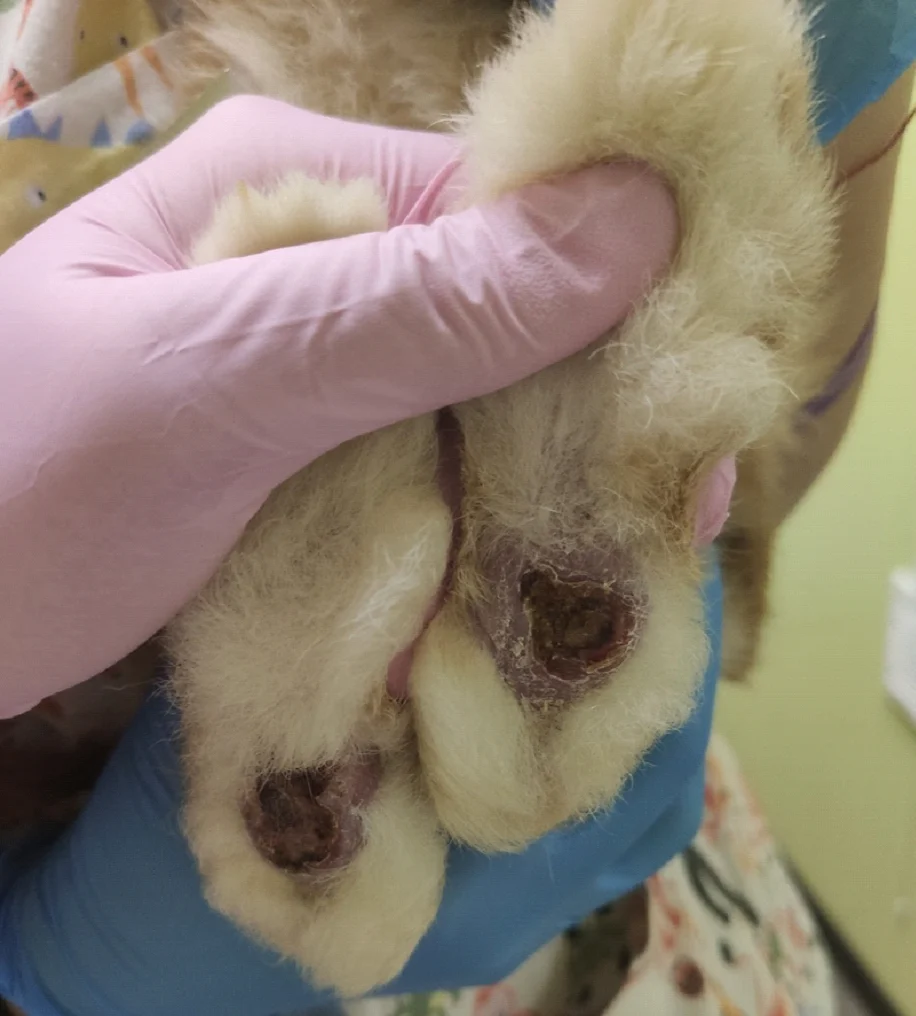
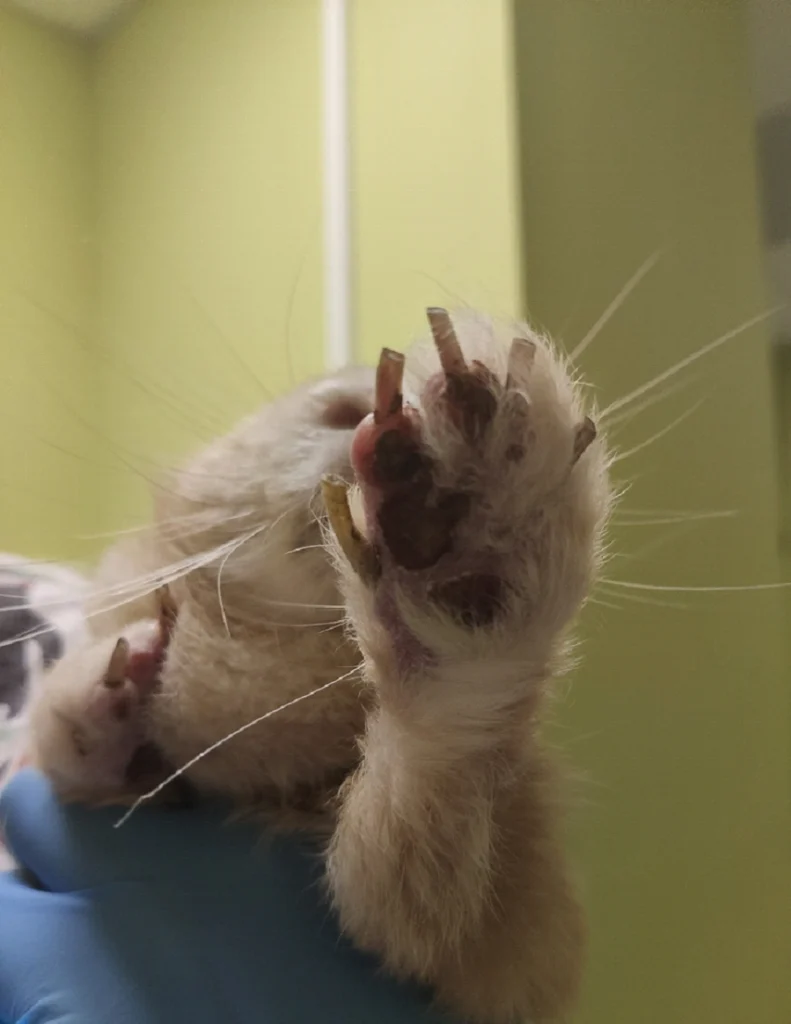
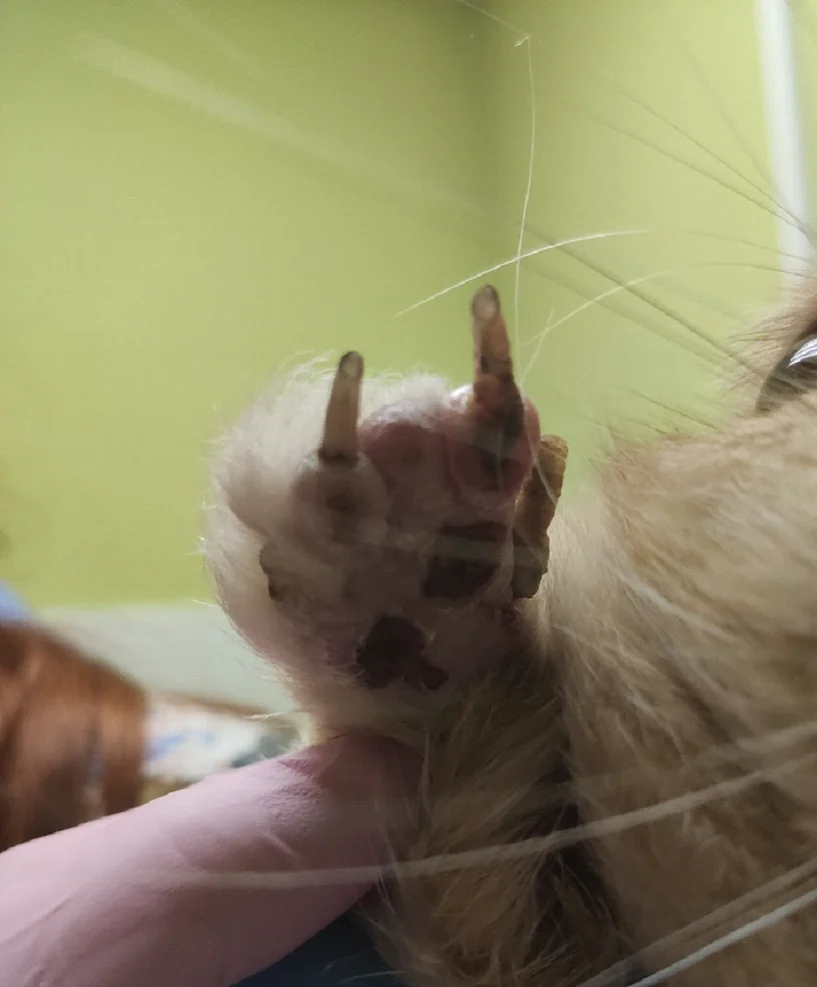
Pathogenesis
- Ischaemia and soft tissue necrosis;
- Alopecia;
- Pain;
- Skin hyperaemia;
- Ulcers of metatarsal/metacarpal areas;
- Bacterial colonisation (Staphylococcus aureus, Pasteurella multocida);
- Involvement of flexor tendons at the tarsus — medial displacement of the superficial digital flexor, altered weight bearing, rapid lesion progression, severe lameness; osteomyelitis may develop.
Pododermatitis is staged:
Stage 1: hair loss
Stage 2: erythema, local oedema; skin intact on plantar/palmar surfaces
Stage 3: erosions/ulcers, bleeding, crust
Stage 4: deep inflammation with tendon involvement (tenosynovitis)
Stage 5: osteomyelitis, septic arthritis.
Treatment of ulcerative pododermatitis
Treatment aims to relieve pressure on weight-bearing surfaces:
- Replace wet/dirty bedding frequently with a thick fresh layer;
- Analgesia (meloxicam 0.3–0.6 mg/kg once daily);
- Diagnose and manage underlying disease (osteoarthritis, spondylosis, infection, poor perfusion);
- Antibiotics when skin is broken and open lesions are present;
- Weight reduction and increased mobility through exercise;
- Bandaging or supports that offload affected areas.
Prognosis
Prognosis is guarded to poor when flexor tendons or osteomyelitis are involved. Limb amputation may occasionally be considered; often humane euthanasia is the only option.
If you are unsure about your pet’s diagnosis and want a second opinion, you can request a veterinary consultation via messengers, phone, or the form on this page.