Dystocia is disturbed parturition due to various causes.
Pathophysiology
Guinea pigs may breed from 2–3 months of age; breeding before 7 months prevents mineralisation of the pubic symphysis. First litter after 8 months carries high dystocia risk.
Neonates are relatively large, which can complicate delivery. Oversized or malformed foetuses also cause dystocia.
Obesity, vitamin C deficiency, uterine inertia, or uterine torsion contribute.
Mean gestation is 68 days (range 59–72).
Primiparous guinea pigs from 8 months old are predisposed.
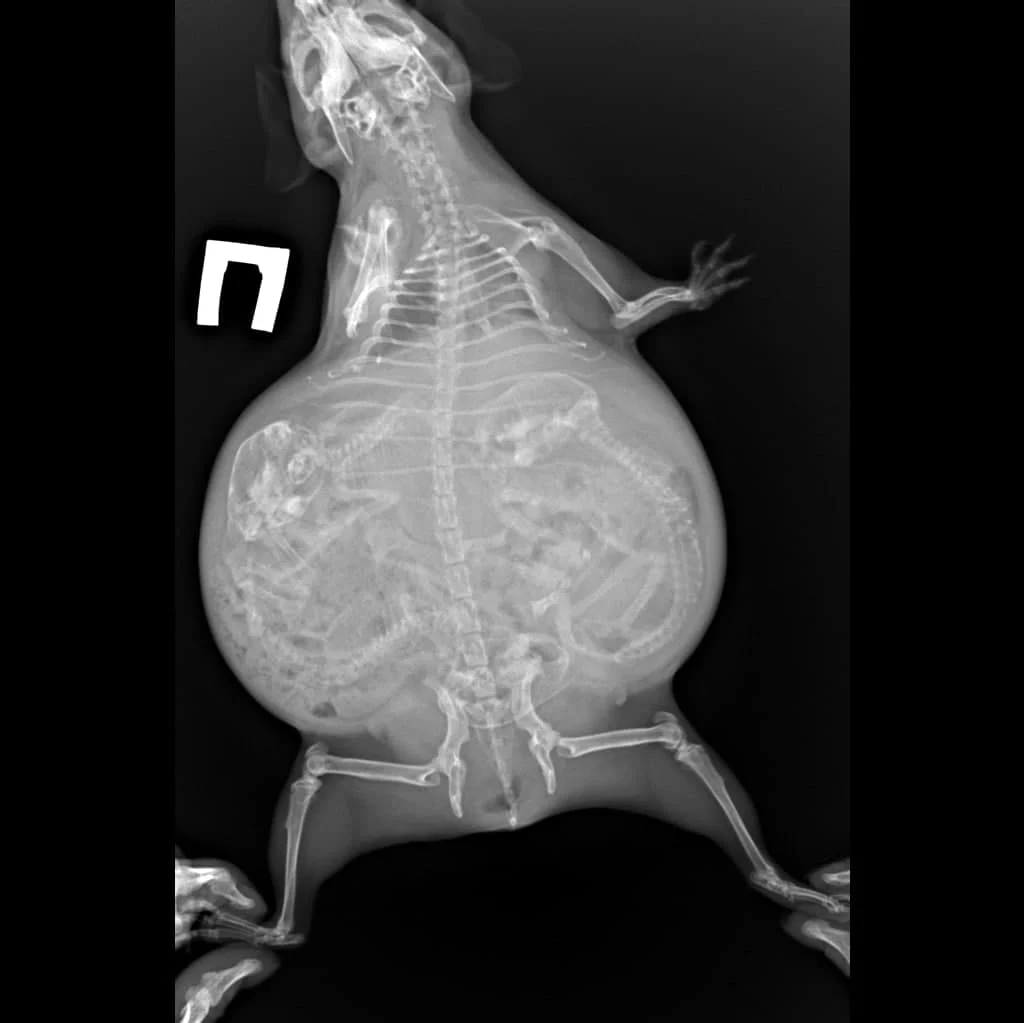
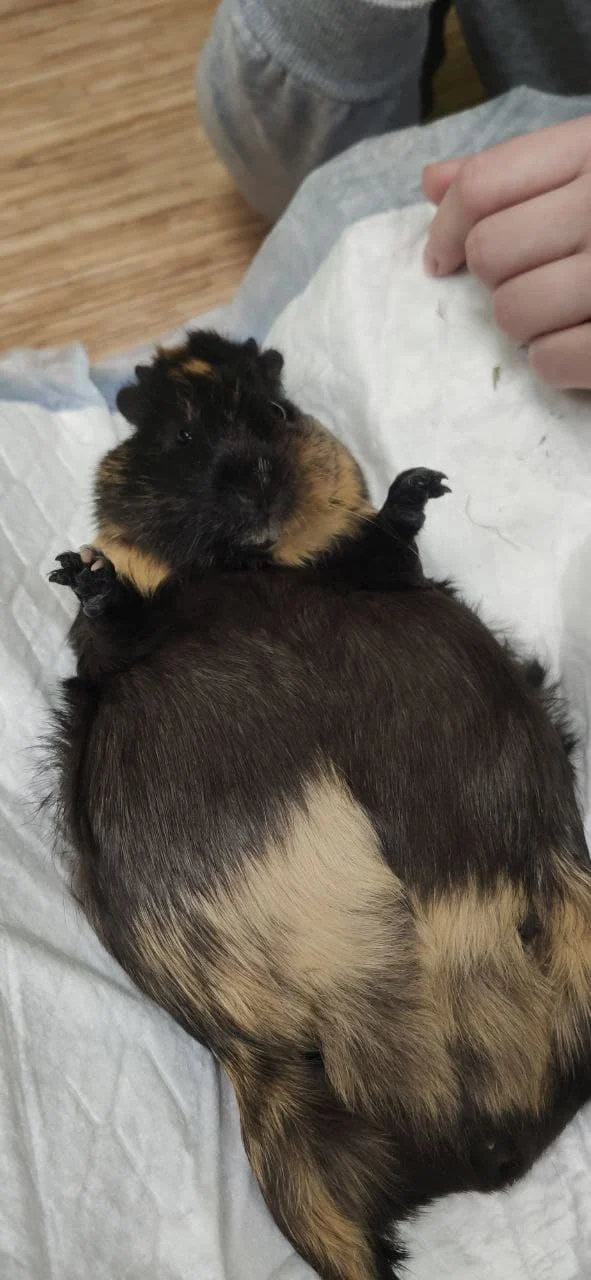
Radiograph and patient — guinea pig with dystocia
History
- mating 59–72 days before presentation;
- mammary enlargement over recent days;
- straining more than 20 minutes;
- restlessness, circling, vocalisation;
- biting abdomen;
- vaginal discharge — cloudy or bloody;
- anorexia;
- lethargy.
Physical examination
- body condition may exceed 5/5;
- foetuses palpable in hypogastrium — if only 1–2 palpable, foetuses may be oversized;
- if pubic symphysis is relaxed and widened 2–3 cm, natural birth may proceed; if symphysis is rigid, caesarean is indicated;
- abdominal pain if uterine torsion;
- gentle palpation for uterine contractions;
- prolonged labour — restless, irritable, hunched, tense, or lethargic;
- vaginal discharge bloody or green.
Causes and risk factors
Most common: breeding after 7 months when symphysis has mineralised. Oversized foetuses (often few in number) are another frequent cause.
Malpresentation and vaginal anomalies — stricture, hyperplasia, aplasia, intraluminal or extraluminal neoplasia.
Uterine inertia is often cited.
Differential diagnoses
Pseudopregnancy lasts up to 72 days if fertilisation fails. Differentiate by palpation, radiography from 6 weeks after mating, or abdominal ultrasound.
Pregnancy toxaemia — lacks straining or contractions and shows ketonuria.
Laboratory tests
CBC depends on duration and cause. Foetal death may show toxic heterophilia, thrombocytosis, acute inflammation.
Prolonged dystocia may cause hypoglycaemia, dehydration, hypocalcaemia (with uterine inertia).
Imaging
Radiography and ultrasound help.
Abdominal radiographs assess foetal number, size, and position.
Ultrasound evaluates uterine inertia and foetal viability.
Treatment
Start with oxytocin if pubic symphysis is relaxed to promote delivery; glucose IV and calcium IM as indicated.
Caesarean if viable foetus and fused symphysis, no response to oxytocin, oversized foetus or malpresentation. Ovariohysterectomy at surgery prevents further pregnancies.
Uterine torsion usually requires ovariohysterectomy.
Nursing care
IV access is often difficult in guinea pigs — consider intraosseous catheter if fluids needed; maintenance crystalloids ~100 ml/kg/day.
Postoperative care may include assisted feeding, analgesia, broad-spectrum antibiotics.
Protect abdominal incision from cage floor contact.
Owners should understand pubic bone changes and avoid breeding females after 7 months.
Contraindications
- Oxytocin contraindicated in obstructive dystocia (foetus too large), malpresentation, or intrauterine foetal death;
- oral gram-positive–active antibiotics (penicillins, cephalosporins, macrolides, lincosamides) — risk fatal dysbiosis and enterotoxaemia;
- potentially nephrotoxic drugs (aminoglycosides, NSAIDs) in pyrexic, dehydrated, or renal-compromise patients.
If you are unsure about your pet’s diagnosis and want a second opinion, you can request a veterinary consultation via messengers, phone, or the form on this page.