Dacryocystitis is inflammation of the lacrimal sac and nasolacrimal duct. In rabbits it is usually secondary to dental disease but may be infectious, spreading from primary rhinitis or conjunctivitis; cultures often grow staphylococci, Pseudomonas, Pasteurella, Moraxella, Bordetella. Skull trauma (maxilla, lacrimal bone) and neoplasia may also cause dacryocystitis.
Pathophysiology
- In rabbits dacryocystitis is often driven by dental disease, malocclusion of incisors, infection and periapical abscess;
- Rabbits have a single lacrimal punctum with a nasolacrimal duct that runs close to cheek tooth and upper incisor roots;
- chronic upper respiratory infection may obstruct the duct with inspirated exudate.
Predisposing factors
- acquired dental disease — common in middle-aged rabbits;
- congenital malocclusion;
- dwarf and lop breeds may have congenital malocclusion.
Clinical signs
- history of dentistry / upper respiratory infection;
- retrobulbar or tooth root abscesses;
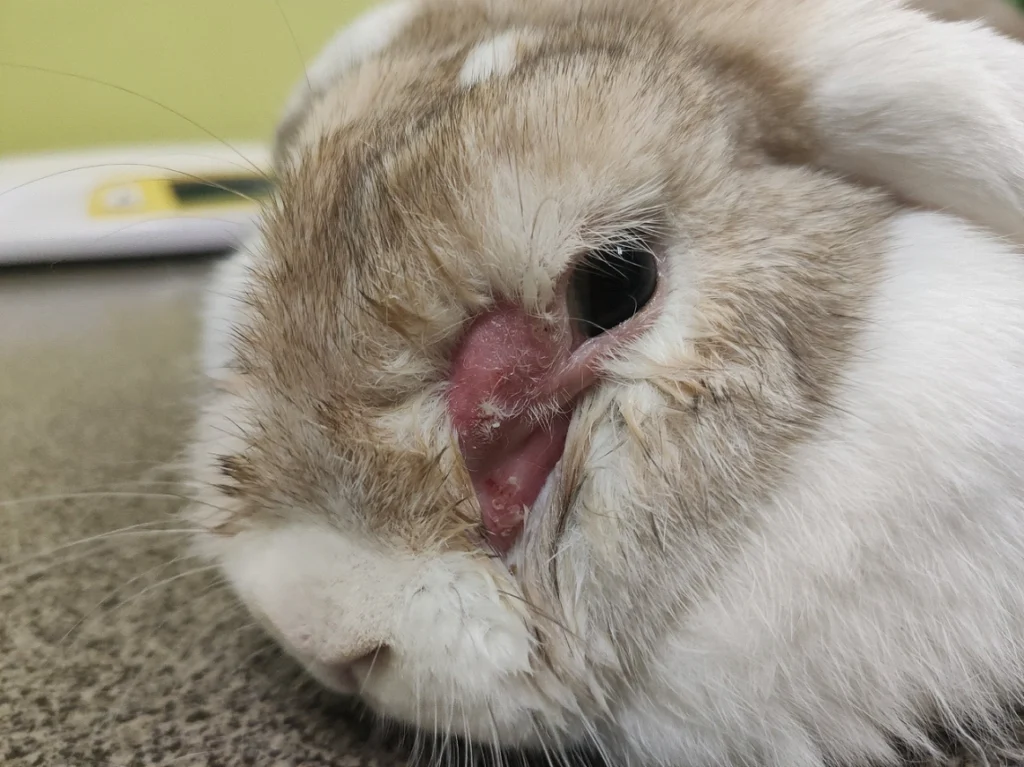
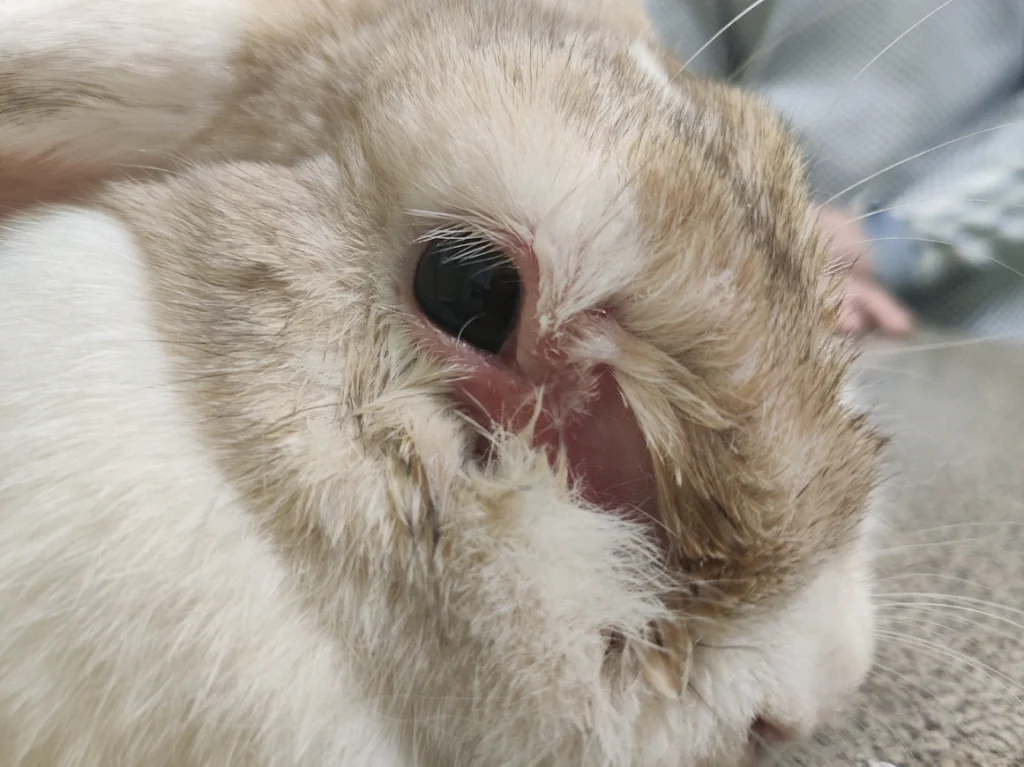
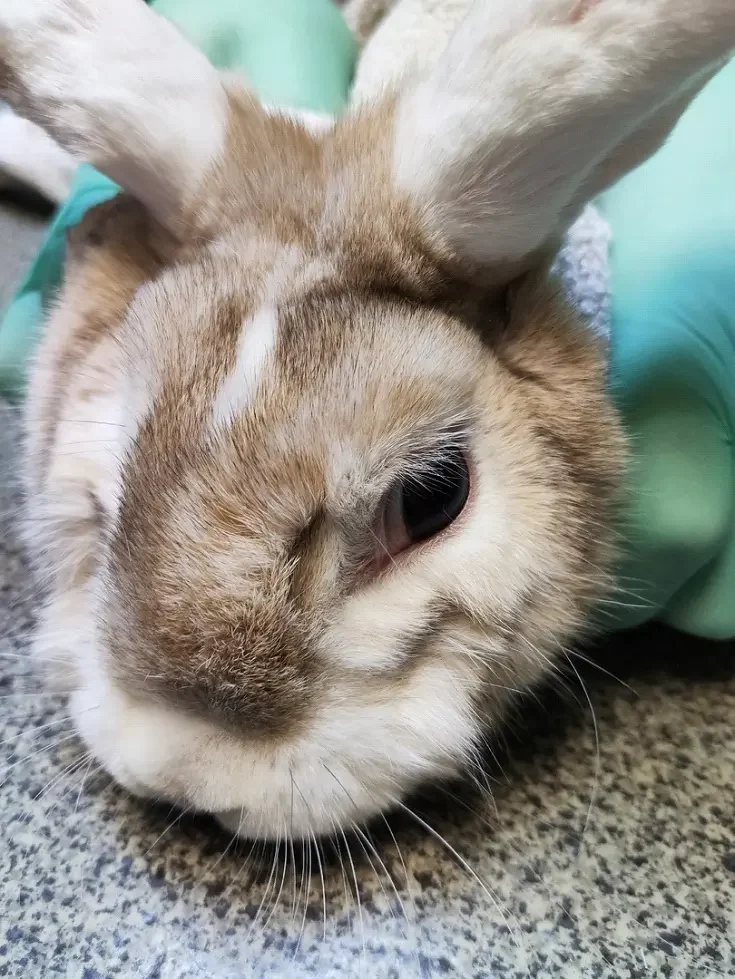
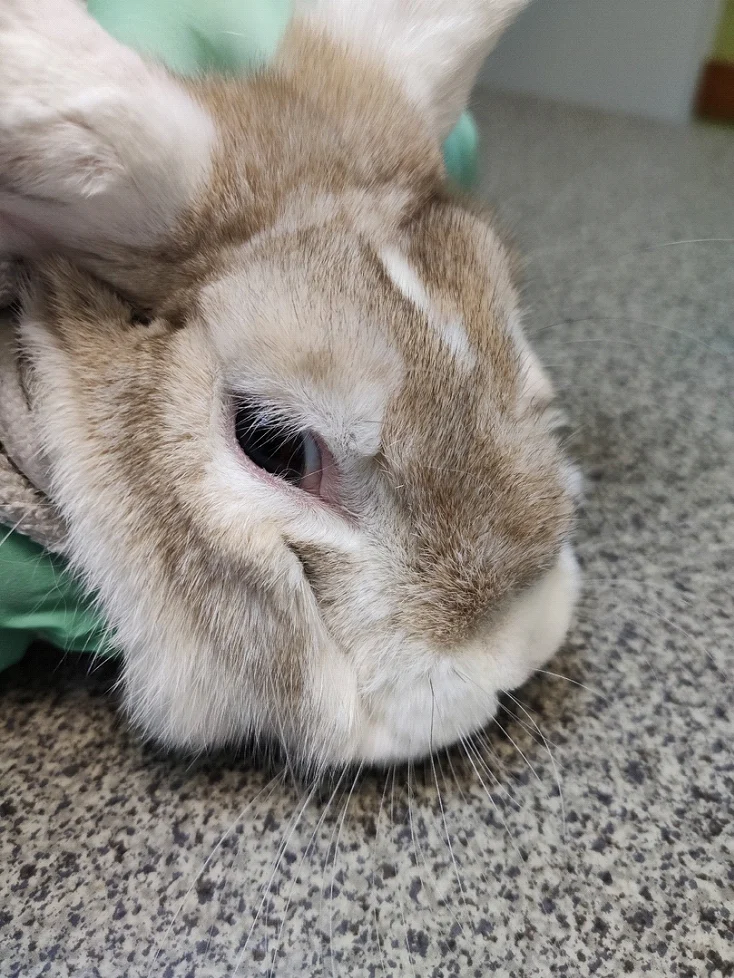
- unilateral or bilateral periocular alopecia, crusting, matted fur on cheeks and/or nose;
- conjunctivitis;
- purulent discharge from the nasolacrimal duct.
Diagnosis
Often straightforward given purulent discharge from the conjunctival sac and failure of fluorescein to appear in the nose on the affected side.
Dacryocystography with radiographs or CT may be used.
Bacterial culture and sensitivity of nasolacrimal duct contents is indicated.
Treatment
Treat the primary obstructive cause (dental disease, nasal/sinus mass, infection). Irrigate nasolacrimal ducts daily for 2–3 days, or every 3–4 days until flush fluid runs clear.
Systemic antibiotics per culture together with topical antibiotics after flushing (4–6 times daily for 14–21 days).
Maintain periocular hygiene.
If you are unsure about your pet’s diagnosis and want a second opinion, you can request a veterinary consultation via messengers, phone, or the form on this page.