Uterine adenocarcinoma in rabbits is a malignant tumour of the uterine endometrium and the most common neoplasm in these animals. Entire females older than 3 years are mainly affected; breed predisposition exists.
Adenocarcinoma may be preceded by endometriosis, endometritis, endometrial hyperplasia, endometrial venous aneurysms. The tumour and associated venous aneurysms often bleed, which can be fatal. Adenocarcinoma is typically multicentric and usually involves both uterine horns. Growth is relatively slow but eventually metastasis occurs by local extension into myometrium and peritoneum or haematogenously (lungs, brain, eyes, skin, bones, liver). Mammary neoplasia or cystic mastitis often coexist.
Mean interval from first clinical signs to death is 12–24 months.
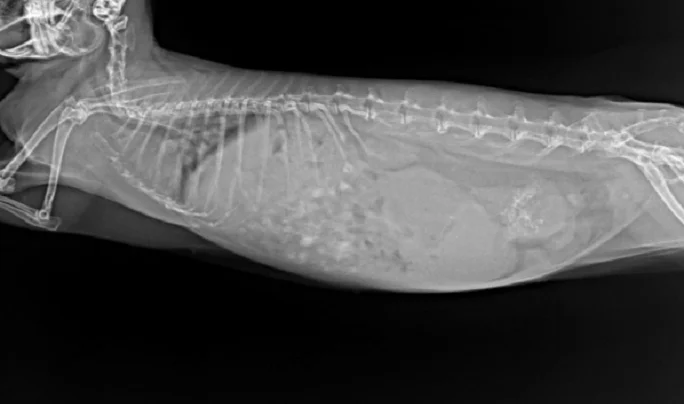
Radiograph of a 7-year-old doe: uterine adenocarcinoma with lung metastases
Clinical signs
- Haematuria (not true haematuria — blood originates from the uterus);
- Vaginal discharge from serosanguinous to purulent with blood tint;
- Mastitis (mammary cysts) — usually cystic process involving one or more glands; cysts contain clear or cloudy fluid;
- Mammary masses;
- Small litter size, increased stillbirths or resorptions, infertility, dystocia;
- Advanced disease with metastases — lethargy, anorexia, pale mucous membranes, dyspnoea (lung metastases).
Clinical examination
- Firm mass palpable dorsal to bladder in meso- and hypogastrium;
- Mammary changes on palpation;
- Blood staining of perineum.
Risk factors
Entire female.
Differential diagnoses
- Pregnancy;
- Endometrial venous aneurysms — may coexist with adenocarcinoma;
- Endometrial hyperplasia, hydrometra, mucometra — may coexist;
- Pyometra — may coexist;
- Other uterine masses;
- Other abdominal masses.
Laboratory tests
- Anaemia with heavy uterine bleeding;
- Liver enzymes may rise with metastases.
Imaging
- Abdominal radiographs — mass in caudal abdomen, usually dorsal to bladder;
- Thoracic radiographs — metastasis screening;
- Ultrasound — to differentiate uterine bleeding from haematuria.
Treatment of uterine adenocarcinoma in rabbits
- Ovariohysterectomy — treatment of choice;
- Assisted feeding if anorexia;
- Blood transfusion with significant uterine bleeding;
- Excision of concurrent mammary masses;
- Analgesia;
- Chemotherapy.
Histology of the removed uterus is mandatory.
Prevention — ovariohysterectomy before 2 years of age.
If you are unsure about your pet’s diagnosis and want a second opinion, you can request a veterinary consultation via messengers, phone, or the form on this page.